
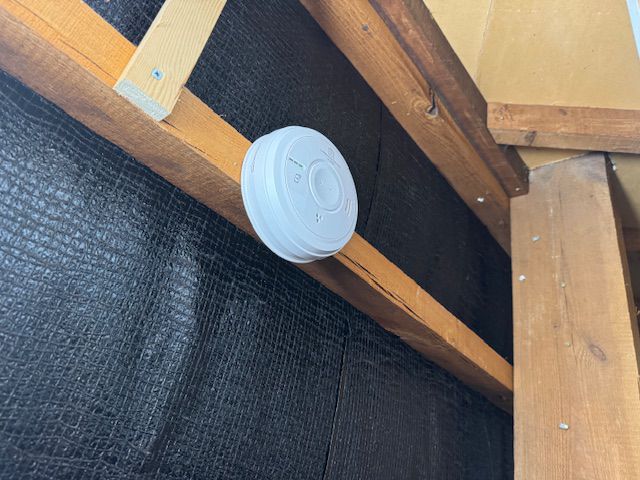
Protect your household with mains-wired, interlinked smoke and heat alarms installed to the current standard — tested, certified and giving you proper early warning.
Why working alarms save lives (and why people neglect them)
Smoke inhalation kills more fire victims than burns. A working alarm gives you 10–15 minutes to escape; without one, you might have 2–3 minutes once smoke fills a bedroom. Mains-powered, battery-backed, interlinked alarms are the standard that actually works — when one detects smoke, they *all* sound throughout the house so people upstairs and downstairs are warned equally. Single alarms in separate rooms don't work well if smoke doesn't reach that room first. People often neglect alarms because they assume nothing will happen, or because they trip on cooking fumes and get disconnected. Good system design minimizes false alarms while maximizing real protection.
System design for your home
We survey your layout and install: optical smoke alarms (living areas, hallways, bedrooms) — these detect visible smoke particles and are less prone to cooking fumes. Heat alarms (kitchen, garage) — respond to temperature rise rather than smoke, so cooking bacon doesn't trigger false alarms. Interlink: All alarms wired on a circuit so they sound together — when one detects danger, everyone in the house knows instantly. Battery backup: Mains power with a 10-year battery so alarms work even if power fails (during a fire, for example).
Where alarms go
On each floor, at least one in a hallway or main living area (where people spend time awake). Bedrooms get them too (you need warning while sleeping). Kitchens and garages get heat alarms. Stairs, lofts, and cellars also get coverage. A 3-storey house typically needs 6–8 alarms.
Cost and installation
Mains-powered interlinked alarms: £60–90 per unit plus installation labour (typically £600–1,200 for a whole house install depending on size and wiring complexity). Battery-only alarms are cheaper upfront (£20–30) but less reliable long-term (people forget to test/replace batteries). We recommend mains with battery backup — it's the gold standard for safety.
Landlord requirements
In England, landlords must provide working alarms and test them monthly or have a professional do it. The system must be mains-powered as of April 2024 (battery-only is no longer compliant). We install compliant systems and provide landlords with certification and testing schedules so compliance is proven.
Peace of mind
Once installed and tested, a system gives you real protection. We show you how to test monthly (a simple button press), and can arrange annual checks so everything stays in working order.