
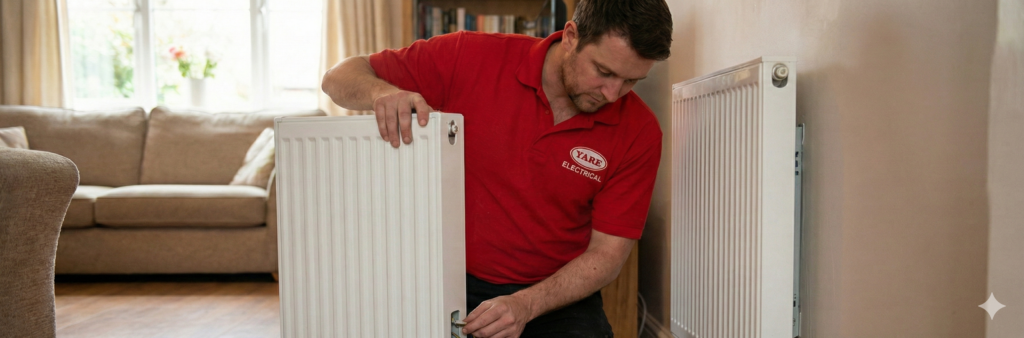
Efficient, controllable electric heating — from individual radiators to underfloor systems and smart thermostats — installed and wired correctly for comfort and economy.
When electric heating makes sense (and when it doesn't)
Electric heating gets a bad reputation (old night storage heaters were expensive and inconvenient), but modern systems are genuinely efficient, controllable, and economical in specific situations: homes off the gas grid, extensions where running pipes is impractical, flats in blocks without central heating, garage conversions, or whole-home systems in well-insulated properties. For a large, poorly-insulated Victorian semi, gas central heating is usually better. For a new build or retrofit with good insulation, electric is competitive and often cheaper to install.
Types of electric heating
Electric radiators: Look and work like traditional radiators but plug in (or hardwired). Excellent for single rooms, extensions, or zone control. Cost ~£150–400 per unit; warm a room in 10–20 minutes. Underfloor heating: Cables or mats embedded in screed under flooring, mostly used in bathrooms or whole open-plan ground floors. Expensive to install (£2,500–5,000) but creates even, comfortable warmth. Panel heaters: Thin, wall-mounted heaters that look modern. Good for tight spaces. Smart thermostats: Allow you to schedule heating by room, set different temps for different times, and control via app — the real money-saver, since you never heat a room you're not using.
Cost and running costs
A single electric radiator for a small room: £300–600 installed. A whole-home electric heating system (radiators in all rooms, smart controls, circuit upgrades): £4,000–8,000+. Running costs depend on insulation and tariff, but roughly: electric heat costs 30–50% more than gas *per unit of heat* (kWh of gas is cheaper). However, gas also loses heat up chimneys and through pipes, so the comparison is complex. Modern electric systems with good insulation can be cost-comparable to gas. A heat pump is more efficient than resistive electric heating and worth considering.
Installation and control
Radiators are usually hardwired for safety and convenience (no plugs trailing around). Each room can have its own thermostat or a whole-home smart system. Load management is important — a house running 6 radiators simultaneously draws significant current, so we size circuits appropriately and sometimes add load-limiting devices so everything runs smoothly.
Best for
Extensions (easier than running pipes), flats (no access to communal boilers), garage conversions (heating needs are modest), homes off the gas grid, or as a top-up to existing heating (a radiator in a cold bedroom is easier than adjusting the whole house thermostat).