A rewire is one of the biggest electrical jobs a home can need — and one where quality really matters. Our NICEIC-approved electricians carry out full and partial house rewires cleanly and to the latest 18th Edition standards, with minimal disruption and full certification on completion.
What a full rewire actually involves
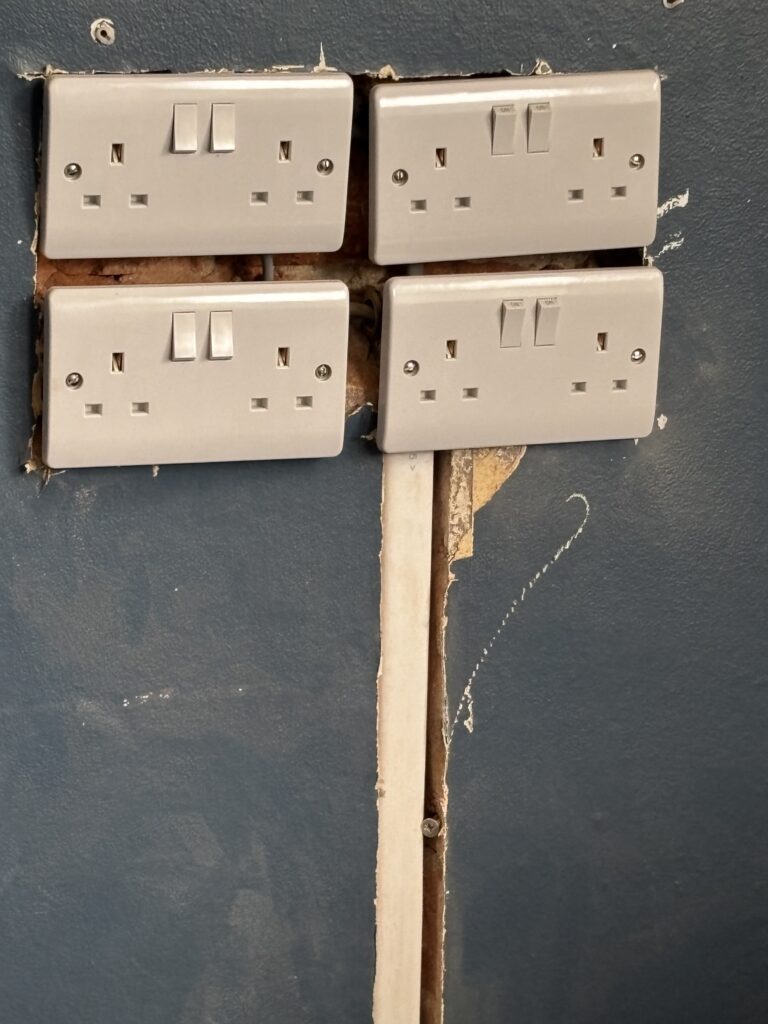
A complete house rewire replaces every wire, switch, socket and the consumer unit, bringing the entire installation from whatever outdated or dangerous state it's in up to current BS 7671 (18th Edition) standards. Work happens in two phases: first fix (cables are threaded through walls, floors and ceilings while plaster is off) and second fix (sockets, switches, lights, and the new consumer unit are connected once walls are ready). A partial rewire updates only specific circuits or areas — ideal after a kitchen/bathroom refit, extension, or when only certain circuits have failed. Most homes fall somewhere between the two: you might fully rewire the main circuits and add new circuits in the kitchen/bathroom where you've done work.
Is your home overdue for a rewire?
Homes built before 1970 almost certainly need one. Wiring deteriorates over time — rubber insulation hardens and cracks after 40+ years, cloth-covered cables rot, old fuse boards lack the protection modern equipment needs. Red flags: a fuse board with rewireable fuses (or very old circuit breakers), black rubber or cloth-sheathed cables visible in the loft or walls, sockets or switches that are warm/scorched, lights that flicker, circuits that trip often, not enough sockets (reliance on extension leads), burn marks or discoloration around outlets, or a failed EICR with C1/C2 codes. If your house is older than 30 years and has never been tested, an EICR is the sensible first step — you might not need a full rewire, just targeted fixes.
Cost and timeline
A typical 3-bed semi-detached house rewire costs £2,500–4,500 depending on layout complexity, cable routing, number of circuits, and whether you're also upgrading the consumer unit (usually included). A 4-bed detached or a home with complex wiring (multiple floors, lofts, extensive outbuildings) might run £4,000–6,000+. The job typically takes 5–10 working days spread over 2–3 weeks (first fix, replastering by others, second fix, testing). You'll have power off for parts of the day during second fix — we arrange this around you. Some electricians over-quote by offering features you don't need; we price for what's actually required and explain every element.
How it improves your home
A rewired house is safer (proper RCD protection, correct circuit protection, modern earth bonding), more reliable (no random tripping, no flickering lights, power where you need it), and enables modern appliances (EV chargers, air-source heat pumps, air conditioning, solar panels all need a competent electrical infrastructure). It also adds property value — buyers expect a safe, code-compliant installation, and surveyors flag old wiring as a red risk. If you're planning to stay 10+ years, a rewire pays for itself in peace of mind alone.
Planning the rewire with you
Before we start, we discuss circuit needs (where do you spend time? where do you charge devices? do you want to add EV charging or solar later?), aesthetic preferences (surface-run cables vs chased in walls), and any temporary power needs during the job. We produce a detailed quotation showing circuit breakdown, consumer unit spec, and completion date. Many clients use the rewire opportunity to add sockets in previously under-powered rooms (a living room might go from 2 sockets to 6) and to install dimmers, smart controls, or data points.
During and after the work
First fix: walls are chased, cables threaded, and we make good with plaster. Your decorator can then skim if needed. Second fix: the board is connected, sockets and switches fitted, and every circuit is individually tested. You'll receive a detailed Electrical Installation Certificate signed by a qualified engineer, and the work is notified under Building Regulations Part P (essential for future insurance claims and property sales). Once complete, you'll have a safe, modern, properly-documented installation that will serve the house for another 40+ years.
Financing and phased approach
If budget is tight, phasing is possible: wire the critical circuits first (heating, lighting, kitchen, bedrooms, main power) and add secondary circuits later. This spreads cost but means some disruption across multiple periods. Most clients opt to bite the bullet and do it all at once — it's tidier, faster, and avoids repeated disruption. We can discuss payment options and sometimes recommend prioritisation based on what your current EICR flagged as most urgent.