
Protect your family, future-proof your property, and add significant value to your home. We provide comprehensive, Part P compliant rewiring services for period and modern properties.
Rewiring a house is one of the most significant maintenance projects a homeowner can undertake. It is also the most critical. If your property in Norwich was built before 1990 and hasn’t been updated, your electrical infrastructure is likely struggling to cope with modern demands. Old rubber insulation, lack of earthing, and ancient fuse boxes are not just inefficient—they are potential fire hazards.
At Yare Electrical, we understand that the thought of a rewire is stressful. You are worried about the dust, the disruption, and the cost. We are here to guide you through the process with honesty and precision. We don’t just make your home safe; we work with you to design a new electrical layout that transforms how you live—giving you sockets exactly where you need them, powerful Wi-Fi in every room, and smart lighting that sets the mood.
Is Your Wiring Safe?
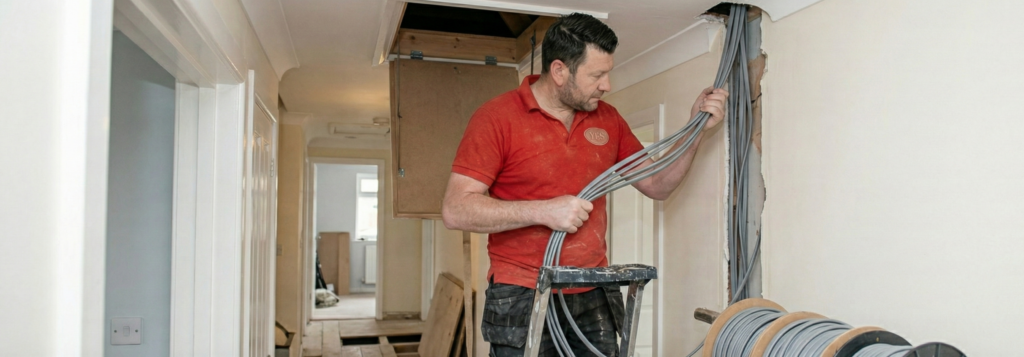
7 Warning Signs Your House Needs Rewiring
Electrical cables are hidden inside walls and under floorboards, so they often degrade unnoticed for decades. However, there are tell-tale signs that your system is reaching the end of its lifespan. If you spot any of these, call us immediately:
1. The “Green Goo”
A sticky green substance oozing from sockets or light switches is a chemical reaction between the plasticiser and the copper in PVC cables installed in the 1960s and 70s. This “greening” makes the insulation brittle and conductive, leading to overheating and fire risk.
2. Rubber or Fabric Cabling
If you look near your electricity meter and see black rubber or cloth-covered wires, your wiring is likely 50+ years old. Rubber dries out and crumbles when touched, leaving live copper conductors exposed. This is an immediate fail on any electrical test.
3. An Obsolete Fuse Box
If you have a wooden backboard, cast-iron switches, or rewirable “ceramic” fuses, your system lacks RCD protection. This means if you touch a live wire or a faulty appliance, the power won’t cut off instantly, putting you at risk of fatal electric shock.
4. Sockets on Skirting Boards
Sockets mounted directly into the skirting board are a classic sign of a pre-1960s installation that has never been brought up to modern building regulations.
5. Constant Tripping
Does your power cut out every time you use the kettle and the toaster together? This suggests your circuits are overloaded and insufficient for modern living.
Full Rewire vs. Partial Rewire
You don’t always need to rip everything out. We will assess your home honestly and recommend the most cost-effective solution.
- Full Rewire: This involves replacing 100% of the cabling, accessories, and the consumer unit. It resets the clock on your electrics for the next 40+ years. It is highly recommended if you are buying a “fixer-upper” or planning a major renovation.
- Partial Rewire: Sometimes, the upstairs lighting circuits are modern (PVC), but the downstairs sockets are old and lacking an earth. We can rewire just the faulty sections. Similarly, if you are fitting a new kitchen, we can rewire just the kitchen circuits and install a new consumer unit, leaving the rest of the house alone if it tests safe.
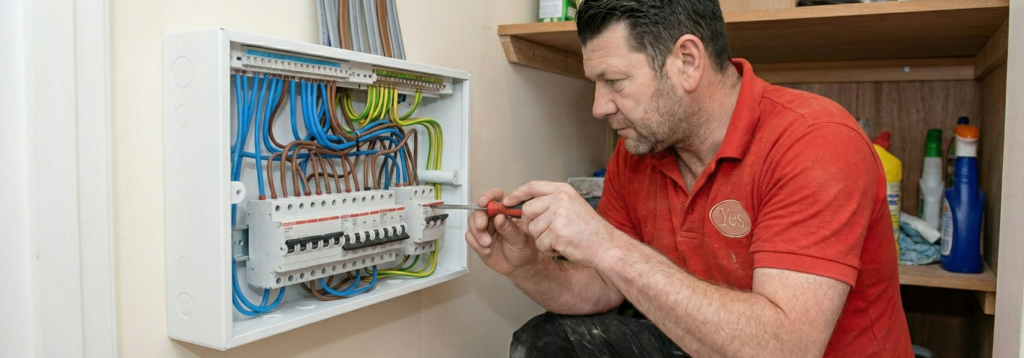
The Rewiring Process: Step-by-Step
We believe in managing expectations. A rewire is a construction project, not just a quick fix. Here is how a typical project runs:
Stage 1: Design & Quote
We walk through your home to plan the new layout. This is your chance to fix all the annoyances of your old house. Want a socket behind the wall-mounted TV? USB points by the bed? Dimmer switches in the lounge? We design it all into the plan.
Stage 2: Preparation
Ideally, the property should be empty. This allows us to work faster and saves you money. If you are living in the property, we will need you to move furniture into the centre of the rooms and lift carpets so we can access the floorboards.
Stage 3: First Fix (The Messy Bit)
We lift floorboards and “chase” channels into the walls to bury the new cabling and install back boxes for your switches and sockets. This creates dust. We use industrial vacuums and dust sheets to minimise the spread, but be prepared for some disruption.
Stage 4: Second Fix
Once the walls have been plastered and painted (by your decorators), we return to screw on the faceplates, hang the light fittings, and connect everything to your new Fuse Board.
Stage 5: Testing & Handover
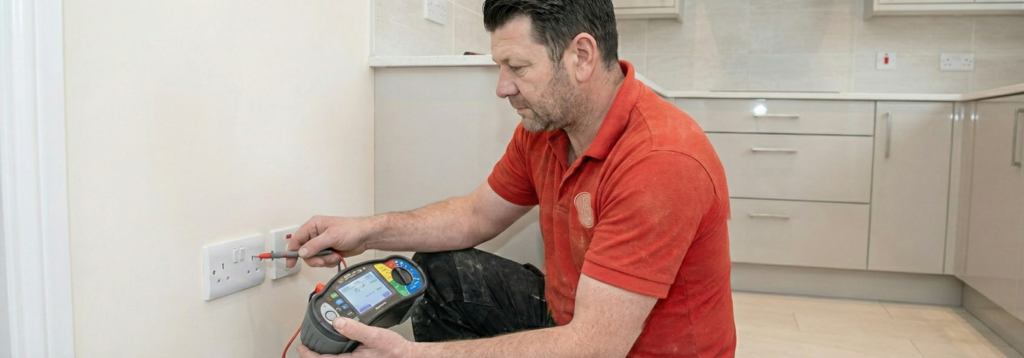
We perform rigorous safety tests. You will receive an Electrical Installation Certificate (EIC) and a Building Regulations Compliance Certificate (Part P). You must keep these documents safe, as solicitors will demand them when you eventually sell the house.
Smart Home Integration
While we are rewiring, it is the cheapest time to upgrade your home’s intelligence. We can install:
- CAT6 Data Cabling: Hard-wired internet points in every room for lag-free gaming and 4K streaming.
- Smart Heating Controls: Wiring for Nest or Hive thermostats.
- Integrated Security: Power supplies for CCTV cameras and video doorbells.
Why Choose Yare Electrical?
We are experts in Norwich’s housing stock.
- Period Property Specialists: From Victorian terraces in the Golden Triangle to flint cottages in North Norfolk, we know how to rewire fragile buildings with care.
- NICEIC Platinum Promise: Our work is backed by an industry-leading 6-year warranty on workmanship.
- Respectful Service: We treat your home like our own. We wear shoe covers, clean up at the end of every day, and ensure you have power and lighting every night if you are living in the property during the works.
Start Your Renovation
Don’t let dangerous wiring hold you back. Contact Yare Electrical on 01603 626400 for a free, no-obligation rewiring consultation.